
A balcony is two systems working together: the load-bearing wood structure (joists, beams, posts, railings) and the waterproofing that protects it — the flashings, membranes, coatings and sealants the statutes call associated waterproofing elements. Nearly every balcony failure begins with water getting past the waterproofing and quietly rotting the framing, which is why Civil Code § 5551 and Health & Safety Code § 17973 require both to be examined together. The cross-section below — an enclosed deck over living space — shows the checkpoints an E3 Certified Inspector looks at.
These elements include but are not limited to, wood or metal railings, sheet metal details, thresholds, stair assemblies (wood) and their attachments to the building structure, if the building structure is wood. All Exterior Elevated Elements should be a minimum of six (6) feet above the ground level.
Load Bearing Components are made of wood or supported by wood. Load bearing components support the structure and the weight of the structure per the original design. All Load Bearing Components should be a minimum of six (6) feet above the ground, except in the case where the load bearing wood structure is attached to the ground level.
Associated Waterproofing Elements protect the structure against water intrusion. These Associated Waterproofing Elements are not limited to, waterproof deck coating system, waterproofing covering wood surfaces, waterproofing at stucco walls, sealant joints around posts and attachments where water may enter the building, flashings, thresholds and other metal fabrications designed and intended to keep water out of the building structure.
Interior Space IS NOT included in the EEE Inspections.
Exterior Space IS included in the EEE Inspections.
Where a person is standing in the interior space, travels through a door separating interior from exterior space, and lands on the exterior Associated Waterproofing.
Where there is an exterior building wall, inspection of the EEE occurs where there are Exterior Elevated Elements (EEE), Load Bearing Components (LBC) and Associated Waterproofing Elements (AWE). This occurs where a person is standing or sitting in the Exterior Space with one or more of the following: Elevated Exterior Elements (EEE) Load Bearing Components (LBC) or Associated Waterproofing Elements (AWE). The inspection does not occur where the person is sitting or standing on the Interior Space. This
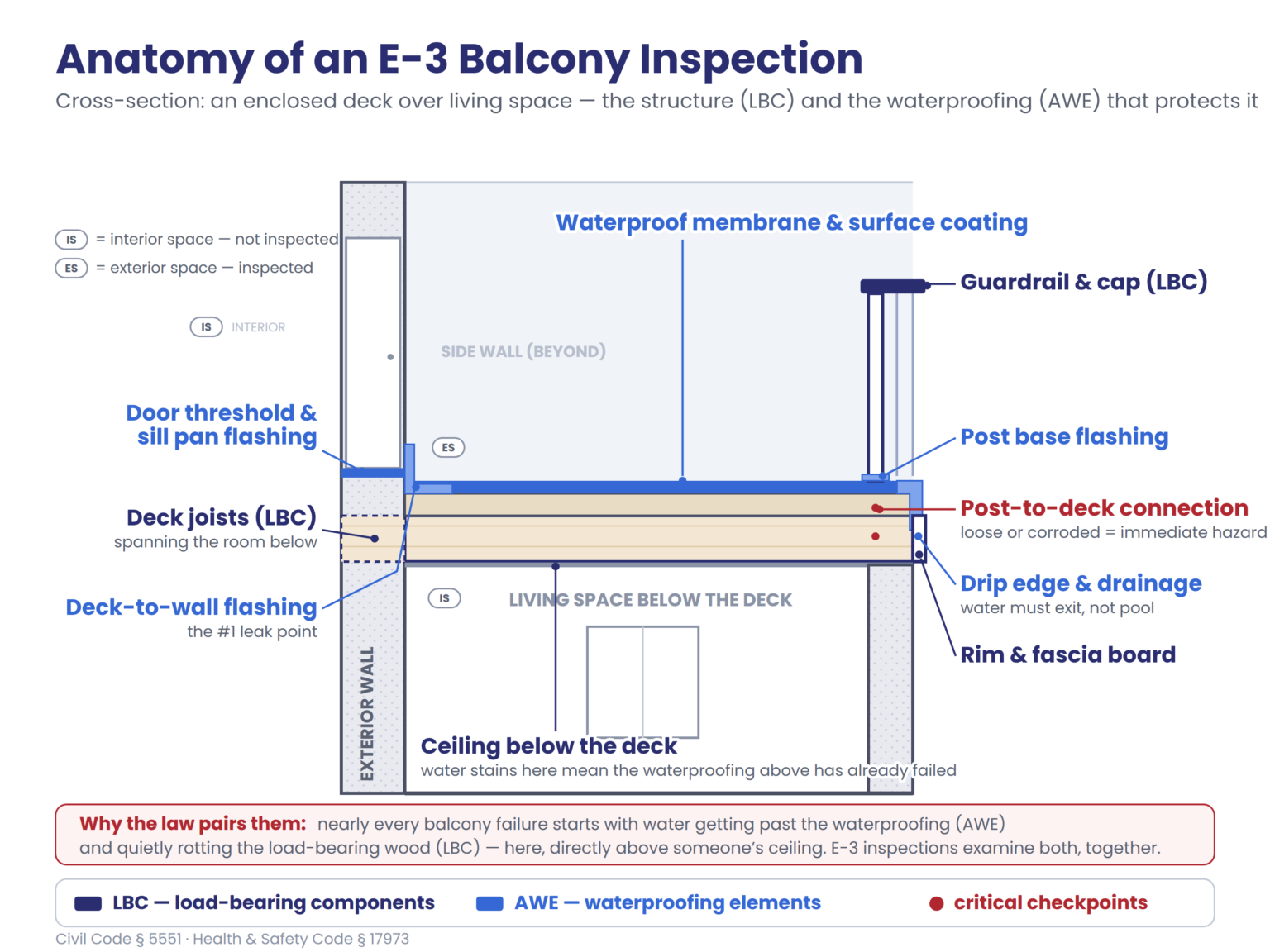
A balcony is two systems working together: the load-bearing wood structure (joists, beams, posts, railings) and the waterproofing that protects it — the flashings, membranes, coatings and sealants the statutes call associated waterproofing elements. Nearly every balcony failure begins with water getting past the waterproofing and quietly rotting the framing, which is why Civil Code § 5551 and Health & Safety Code § 17973 require both to be examined together. The cross-section below — an enclosed deck over living space — shows the checkpoints an E3 Certified Inspector looks at.
These elements include but are not limited to, wood or metal railings, sheet metal details, thresholds, stair assemblies (wood) and their attachments to the building structure, if the building structure is wood. All Exterior Elevated Elements should be a minimum of six (6) feet above the ground level.
Load Bearing Components are made of wood or supported by wood. Load bearing components support the structure and the weight of the structure per the original design. All Load Bearing Components should be a minimum of six (6) feet above the ground, except in the case where the load bearing wood structure is attached to the ground level.
Associated Waterproofing Elements protect the structure against water intrusion. These Associated Waterproofing Elements are not limited to, waterproof deck coating system, waterproofing covering wood surfaces, waterproofing at stucco walls, sealant joints around posts and attachments where water may enter the building, flashings, thresholds and other metal fabrications designed and intended to keep water out of the building structure.
Interior Space IS NOT included in the EEE Inspections.
Exterior Space IS included in the EEE Inspections.
Where a person is standing in the interior space, travels through a door separating interior from exterior space, and lands on the exterior Associated Waterproofing.
Where there is an exterior building wall, inspection of the EEE occurs where there are Exterior Elevated Elements (EEE), Load Bearing Components (LBC) and Associated Waterproofing Elements (AWE). This occurs where a person is standing or sitting in the Exterior Space with one or more of the following: Elevated Exterior Elements (EEE) Load Bearing Components (LBC) or Associated Waterproofing Elements (AWE). The inspection does not occur where the person is sitting or standing on the Interior Space. This