
Civil Code § 5551 (SB 326): California’s HOA Balcony Inspection Law, Explained
What Civil Code § 5551 Requires
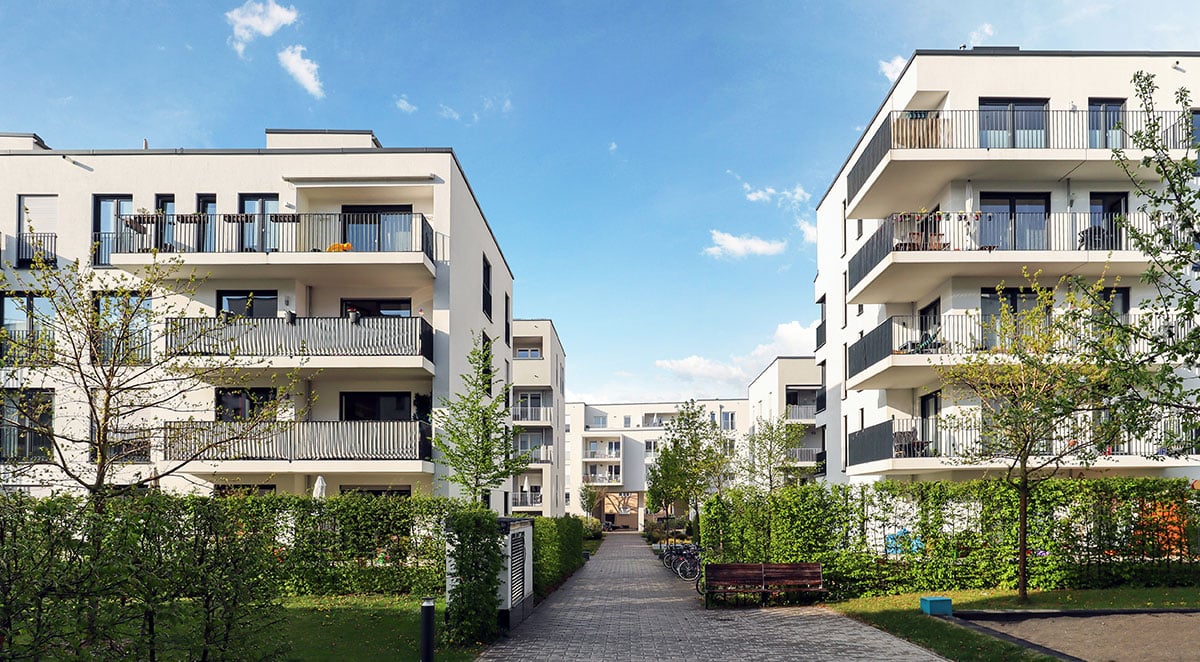
Civil Code § 5551 — enacted by Senate Bill 326 (2019) as part of the Davis-Stirling Act — requires condominium and other common-interest developments with three or more attached units to have their Exterior Elevated Elements (EEEs) inspected by a qualified professional at least once every nine years. The first inspection was due by January 1, 2025. That deadline has passed: an association that has not yet completed its inspection is out of compliance today, and boards are now hearing about it from escrow officers, insurers and city code-enforcement desks rather than from a distant deadline.
The Three Terms the Statute Defines
Who May Inspect Under § 5551
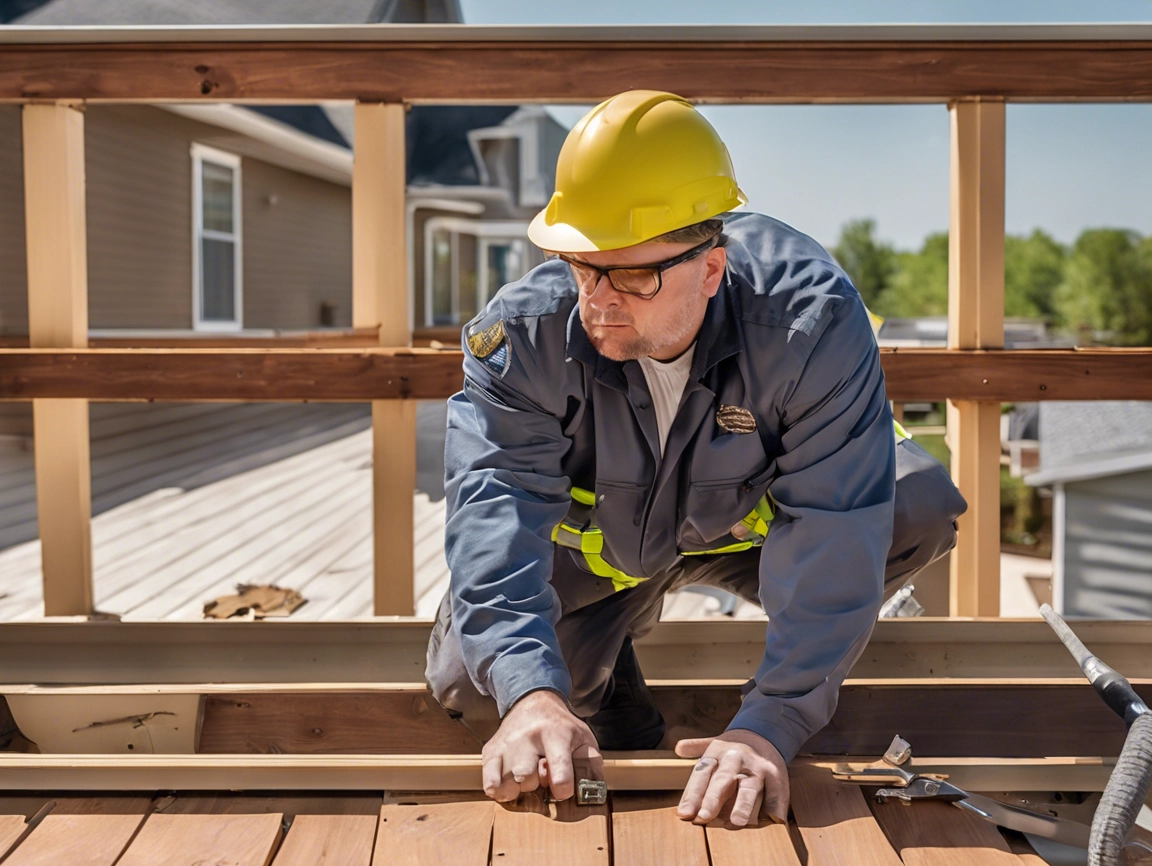
Only a licensed structural engineer or architect could perform the inspection as originally enacted; AB 2114 (2024) added licensed civil engineers. The inspector examines a statistically significant sample of each type of EEE — sized to give 95% confidence that the results reflect the whole building — and issues a report that becomes part of the association’s official records.
What the Inspection Report Must Contain

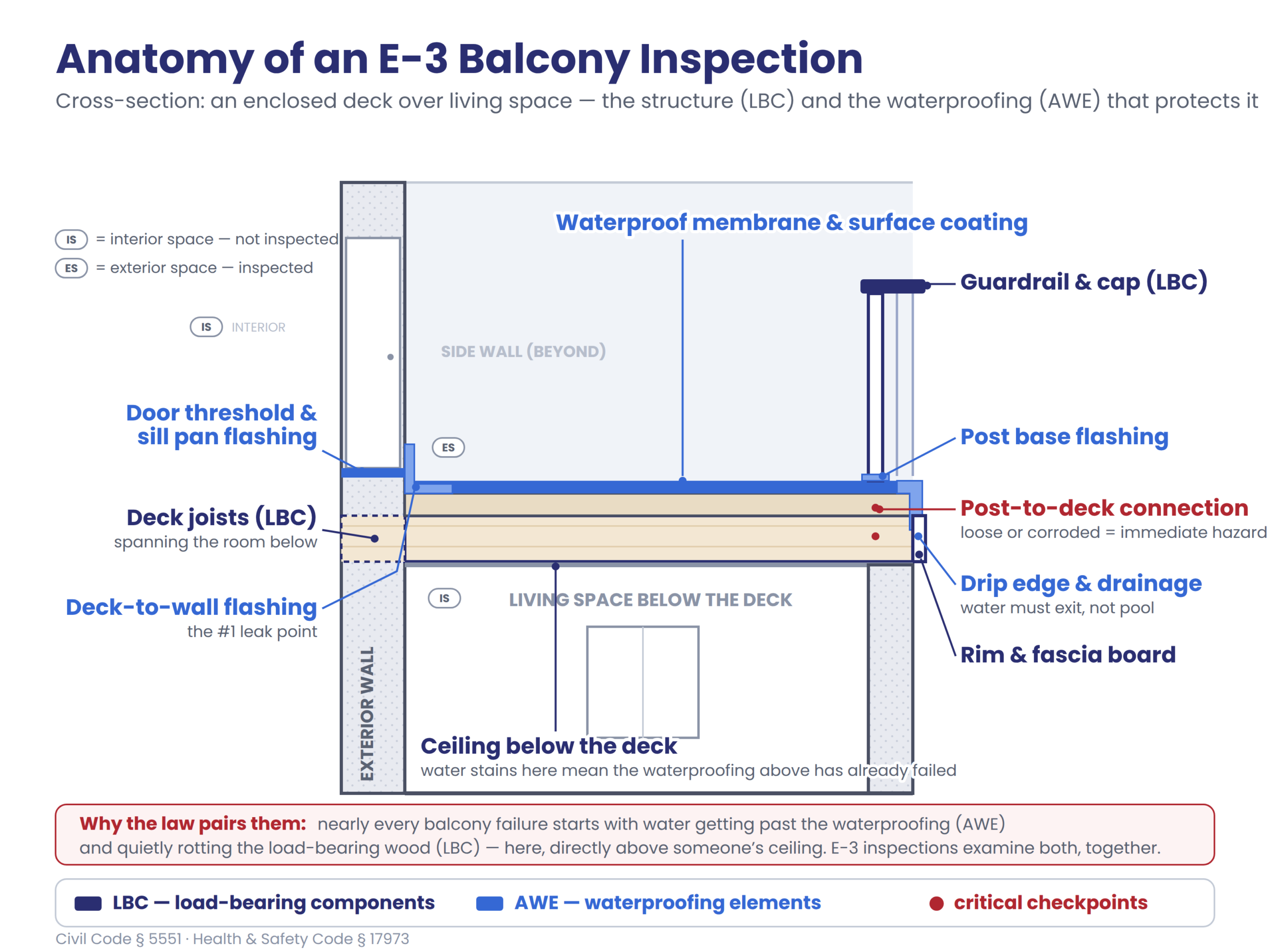
The report must identify the load-bearing components and associated waterproofing systems, state their current physical condition — including whether any element poses an immediate threat to the health and safety of residents — project their expected future performance and remaining useful life, and give recommendations for repair or replacement. The report goes to the board, is incorporated into the association’s reserve-study process, and must be kept for two inspection cycles (18 years).
When an Immediate Threat Is Found
If the inspector finds an EEE that poses an immediate threat to safety, the statute does not allow the finding to sit in a drawer: the inspector must deliver the report to the association and to the local code-enforcement agency within 15 days, the association must take preventive measures immediately — including barring access to the element — and emergency repairs follow local permitting.
How the Law Has Changed Since Enactment
Two amendments matter to boards today. AB 2114 (2024) added licensed civil engineers to the inspectors § 5551 permits, easing the capacity crunch that made 2024–25 scheduling difficult. And AB 1101 (2024), which would have let structural pest-control (termite) companies perform these inspections, died in committee — so a termite report is not, and never has been, a § 5551 inspection. No further amendments have taken effect as of this page’s review date.
Local City Programs
Some cities layer their own Exterior Elevated Elements (E3) programs on top of the state law, with local certification forms and deadlines. Berkeley — where the 2015 balcony collapse occurred — requires associations to file an inspection certification with the city itself and extended its condominium certification deadline to August 1, 2026 (now passed); compliance with Berkeley’s program satisfies the state statutes. Check whether your city runs a local program before assuming the state deadline is the only one.
Life After the Deadline
With January 1, 2025 behind us, § 5551 questions now surface at the worst possible moments: during escrow, when buyers and lenders ask for the inspection report; at insurance renewal, when carriers increasingly treat EEE compliance as an underwriting requirement — and may deny water-intrusion claims where no inspection file exists; and when a city notice arrives. A completed, well-documented E-3 inspection answers all three. If your association has not had one, the practical path is simple: engage a qualified inspector, complete the statistically significant sample, and put the report in the association’s records.
Frequently Asked Questions
Ready to schedule your association’s § 5551 inspection?
Reviewed September 2026 by the E3 Inspection Association.