
Health & Safety Code § 17973 (SB 721): California’s Apartment Balcony Inspection Law, Explained
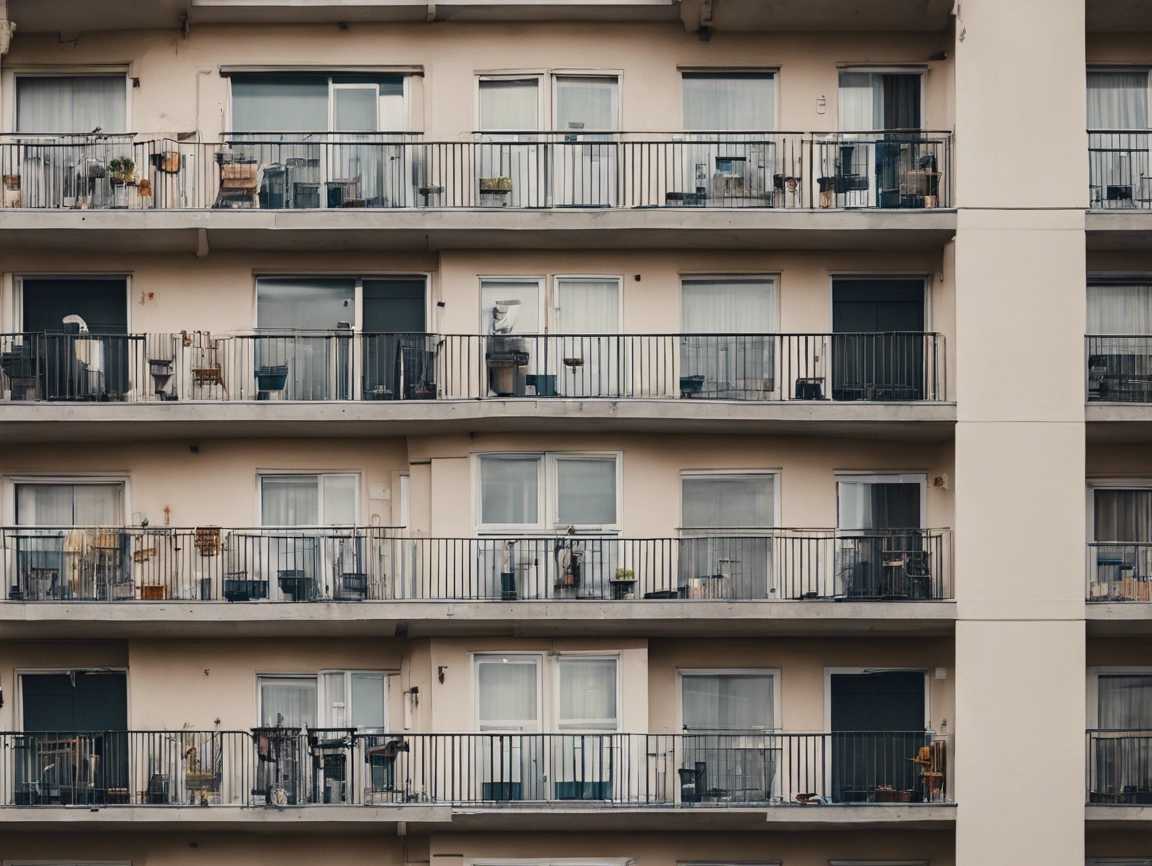
What Health & Safety Code § 17973 Requires
Health & Safety Code § 17973 — enacted by Senate Bill 721 (2018) — requires owners of buildings with three or more dwelling units to have their Exterior Elevated Elements (EEEs) inspected at least once every six years. The original deadline was extended one year by AB 2579 (2024) because there were not enough qualified inspectors in the state; the extended deadline was January 1, 2026 — and it has now passed. An apartment building that has not completed its first inspection is out of compliance today.
(Condominium and HOA buildings follow the companion law, Civil Code § 5551. The two statutes use the same core definitions but differ in deadlines, inspectors and sampling.)
What Gets Inspected
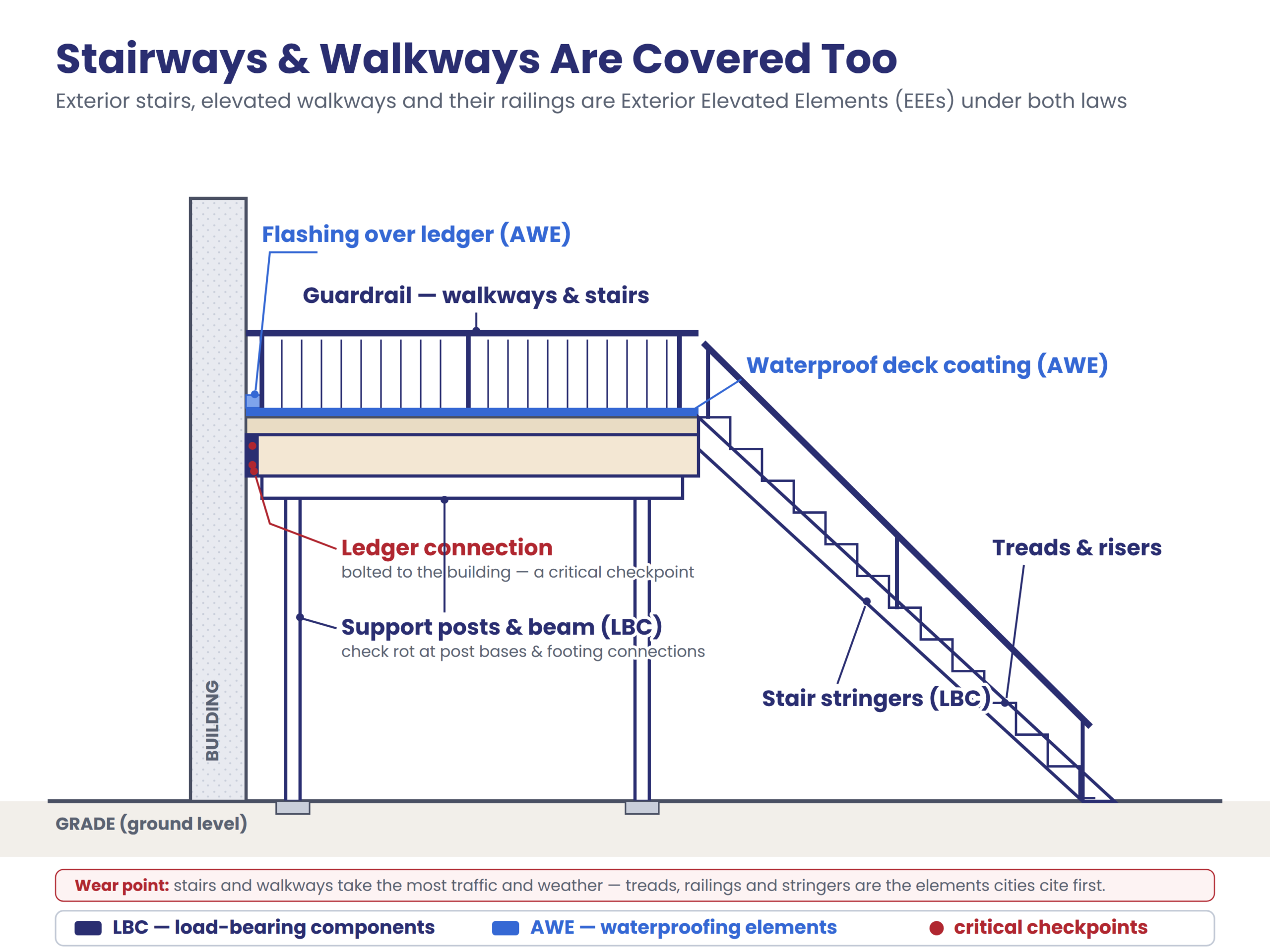
The statute covers the same three-part anatomy shown in the diagrams on this site: the Exterior Elevated Elements themselves — balconies, decks, porches, stairways, walkways and entry structures with walking surfaces more than six feet above ground, designed for human use and supported substantially by wood — their load-bearing components (LBC), and the associated waterproofing elements (AWE): the flashings, membranes, coatings and sealants that keep water out of the structure. Interior space (IS) is not inspected; the exterior space (ES) a person reaches through the door is.
Who May Inspect Under § 17973
The apartment law allows a broader bench than the HOA law: a licensed architect; a licensed civil or structural engineer; a building contractor holding an A, B or C-5 license with five or more years of experience constructing multistory wood-frame buildings; or a certified building inspector or building official. The inspector must directly and visually examine — using exploratory openings where needed — at least 15% of each type of EEE on the property.

The Report and Its Clocks

Who May Repair
As originally enacted, SB 721 kept inspection and repair separate. SB 607 (effective 2022) changed that: the contractor who performed the inspection may now also perform the repairs, provided the work complies with local permits, manufacturer specifications and the Building Standards Code. For owners this is a practical gain — one qualified firm can carry a deficient element from finding to fix. (A 2024 bill, AB 1101, that would have let pest-control companies perform these inspections died in committee — a termite report does not satisfy § 17973.)
Penalties for Ignoring It
If repairs are not completed in time, the local enforcement agency may assess civil penalties of $100 to $500 per day until they are, may record a safety lien against the property, and may pursue the building as a substandard condition. Reports must be kept for two inspection cycles (12 years) and presented to the local authority on request — and to prospective buyers in a sale.
Life After the Deadline
With the January 1, 2026 deadline passed, cities are moving from courtesy notices to enforcement, and the practical pressure points are the same ones HOA boards discovered a year earlier: escrow requests, insurance renewals and code-enforcement letters. Carriers increasingly treat EEE compliance as an underwriting requirement, and water-intrusion claims can be denied where no inspection file exists. A completed inspection with a well-documented report resolves all three pressure points. If your building has not had one, the path is: engage a qualified inspector, complete the 15% sample, calendar the 120-day clocks for any repairs, and file the report where you can produce it on demand.
Note also that some cities — Berkeley, Malibu, Fremont, El Cerrito and others — run their own local E3 programs with city-level certification filings and deadlines on top of the state law. Berkeley requires the inspection certification to be filed with the city, and compliance with its program satisfies the state statutes. Check your city before assuming the state rules are the whole story.
Frequently Asked Questions
Ready to get your building compliant with § 17973?
Reviewed September 2026 by the E3 Inspection Association.