
After the 2015 Berkeley balcony tragedy, California enacted two laws requiring periodic inspection of wood-supported Exterior Elevated Elements — and both are now in full effect statewide. Wherever your building stands today, compliance is straightforward once you know which law applies. Start here.
| HOA Law — Civ. § 5551 (SB 326) | Apartment Law — H&S § 17973 (SB 721) | |
|---|---|---|
| First inspection due | January 1, 2025 — the law is in effect; buildings not yet inspected should schedule now | January 1, 2026 (per AB 2579) — the law is in effect; buildings not yet inspected should schedule now |
| Then every | 9 years | 6 years |
| Newer buildings | Permitted after 1/1/2020: within 6 years of occupancy | Permitted after 1/1/2019: within 6 years of occupancy |
| Who may inspect | Licensed architect or structural/civil engineer | Architect; civil/structural engineer; A, B or C-5 contractor with 5+ years multistory wood-frame experience; certified building inspector/official (not employed by the local authority) |
| How many EEEs | Statistically significant sample, drawn from a random list per the statute's formula | At least 15% of each type of EEE (15% of balconies, 15% of stairways…) |
| Method | Visual, with moisture meter / infrared / borescope as needed; findings of water intrusion may trigger a further inspection | Visual; inspector may recommend further inspection |
| Report contains | Elements identified; current condition incl. any immediate safety threat; remaining useful life; repair recommendations | Photos; test results; baseline narrative for future comparison; any immediate threat + whether to bar access or shore |
| Report kept | 2 cycles (18 years); goes into the reserve study | 2 cycles (12 years); delivered to the buyer when the building sells |
| Immediate threat | Report to the owner/association immediately and the local code-enforcement agency within 15 days; access barred until repairs are inspected and approved | |
| Repair clocks & fines | Association's duty to maintain; emergency process above | Permit within 120 days → repairs within 120 days of permit; unresolved after 180 days + 30-day notice → $100–$500 per day |
| Who may repair | Any properly licensed professional, under the association's duty to maintain | Any properly licensed professional — and since SB 607 (2022), the inspecting contractor may also perform the repairs |
One open question the statutes don't settle: whether the inspector must be physically present, since both laws only state a preference for "visual inspection." Until the legislature or courts clarify, the conservative reading — physical presence — prevails in practice.
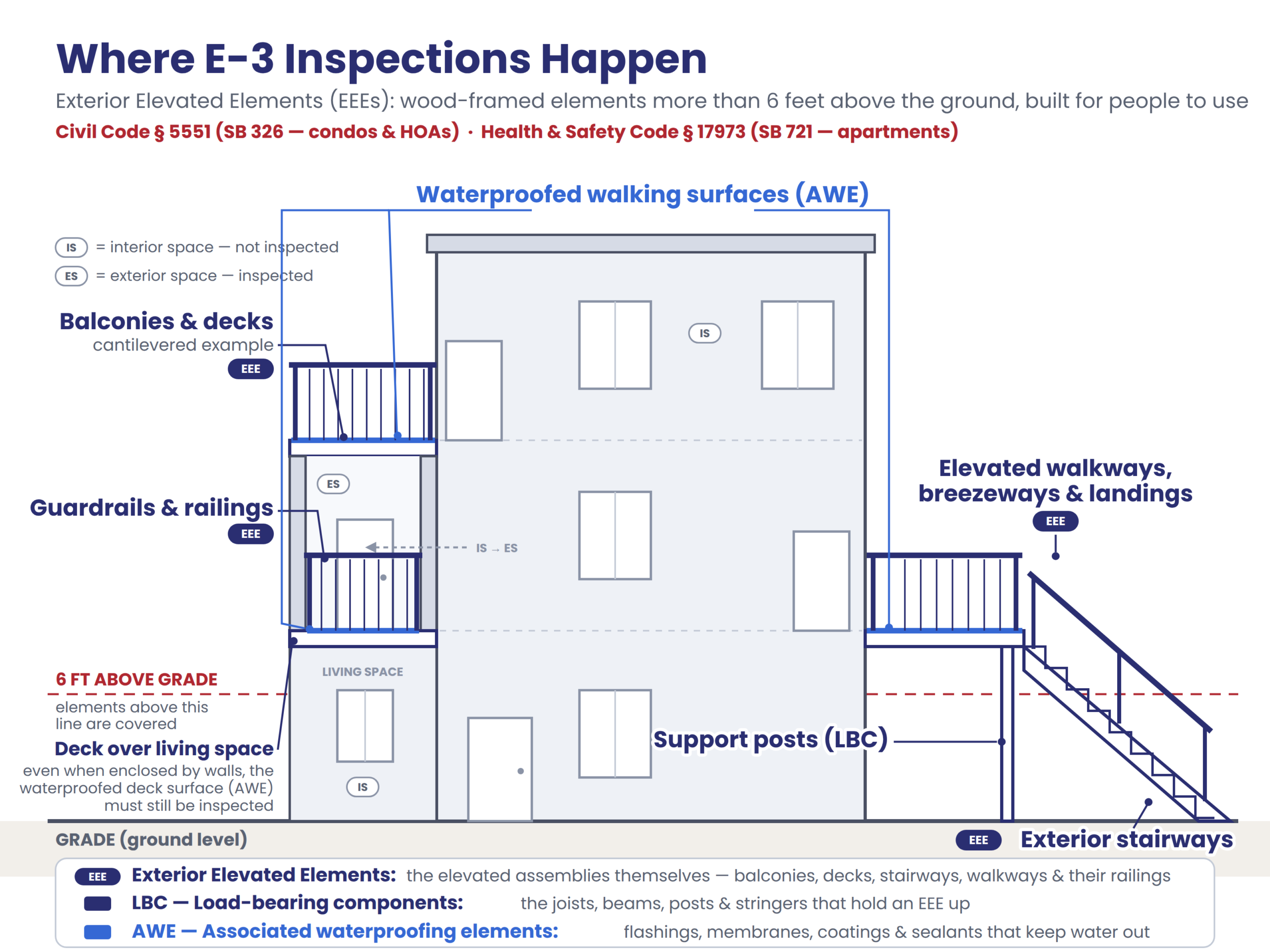
See exactly where inspections happen in our diagrams.
| Year | Change | What it means today |
|---|---|---|
| 2018 — SB 721 | Apartment law enacted (H&S § 17973) | Buildings with 3+ dwelling units must inspect EEEs every 6 years |
| 2019 — SB 326 | HOA law enacted (Civ. § 5551) | Common-interest developments must inspect every 9 years |
| 2022 — SB 607 | Repair rule relaxed (apartment law) | The contractor who inspects may now also perform the repairs |
| 2024 — AB 2114 | Civil engineers added to § 5551 | HOAs may now use licensed civil engineers, not only structural engineers and architects |
| 2024 — AB 2579 | Apartment deadline extended one year | First SB 721 inspection was due January 1, 2026 — now in effect |
| 2024 — AB 1101 | Died in committee | Would have let pest-control (Branch 3) companies inspect — it did not pass, so they remain not authorized |
No further amendments to either statute have taken effect as of this page's review date. When the legislature moves, this page is updated.

A growing number of California cities — Berkeley, Malibu, Fremont, El Cerrito, Burlingame and others — operate local Exterior Elevated Elements (E3) programs layered on top of the state statutes, often with their own certification forms, submission portals and deadlines. Berkeley, where the 2015 tragedy occurred, requires owners to file an inspection certification with the city itself (its condominium certification deadline was extended to August 1, 2026 — now passed), and compliance with Berkeley's program satisfies the state laws. Before you file anything, check whether your city has a local program — a Certified E3 Inspector will know the local requirements alongside the state ones.
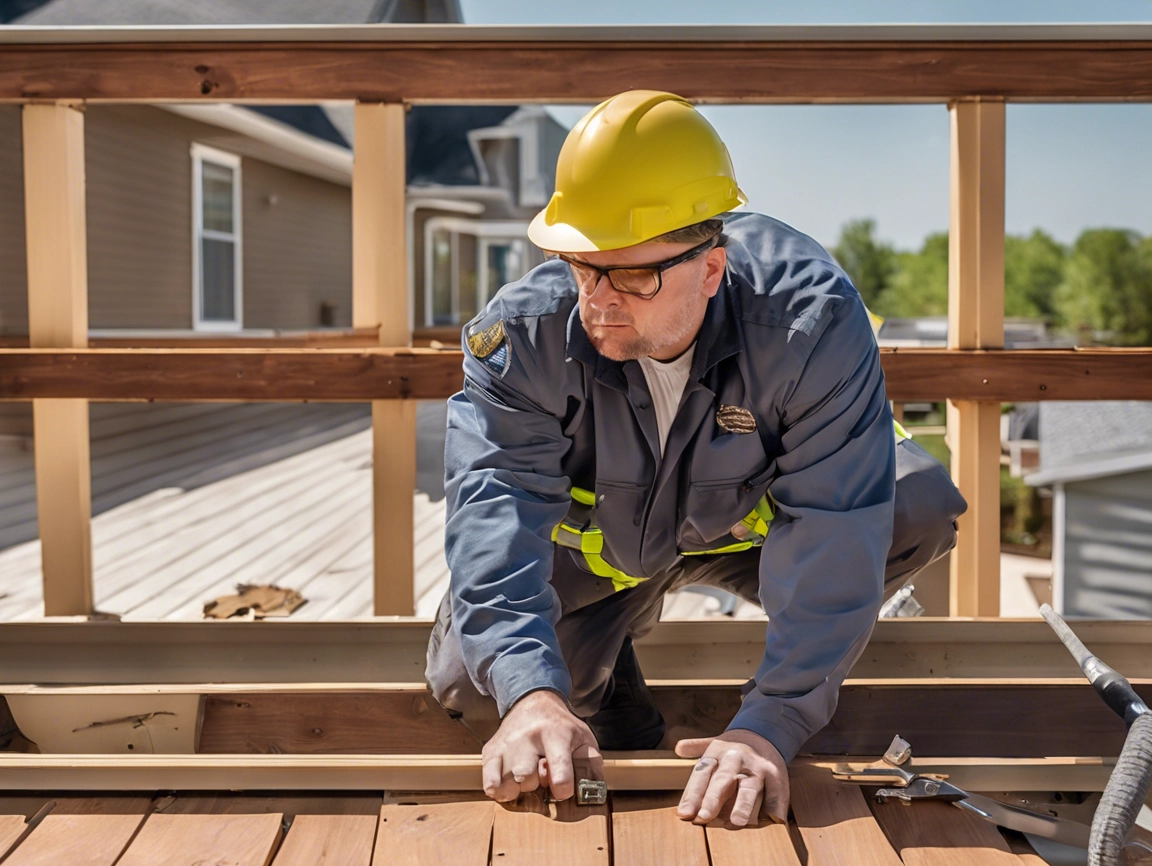
One visit from a Certified E3 Inspector completes the statutory inspection and delivers a report that satisfies escrow, insurers and your city — for years to come.
Find a Certified E3 Inspector